Forgiveness… The Art of Holding Both

Forgiveness is something I’ve been sitting with lately. Not necessarily because there’s someone I need to forgive, but because life has a way of bringing us back to experiences we believed we’d already made peace with.
I’ve come to understand forgiveness as something much deeper than simply deciding to let something go. It’s intertwined with compassion, with our capacity to recognize our shared humanity, and with our willingness to release the attachments we carry from the past.
Sometimes those attachments are to people. Sometimes they’re to the choices we’ve made, the choices others have made, or the stories we’ve created around what happened. And sometimes they’re attached to the life we believed we were going to have.
I’ve been feeling that last one quite a bit lately.
There are moments when I find myself angry with my husband for dying. Even writing those words feels interesting because, of course, I know he didn’t choose to leave. I know that. And yet, there are moments when I’m navigating life with our daughter, witnessing what she’s missing, and feeling the weight of being the parent who’s still here, when I feel angry that he’s not.
I love him without condition. I miss him. I understand that he didn’t maliciously or intentionally choose this. And sometimes I’m still just pissed.
All of those things are true.
That’s probably one of the most important things I’ve come to understand about forgiveness. We don’t have to abandon one truth in order to hold another.
I’ve noticed how often we feel compelled to make our experiences fit neatly into one truth or another. If we love someone, perhaps we shouldn’t be angry with them. If we understand why something happened, perhaps we shouldn’t still feel hurt by it. If we’ve forgiven, perhaps we shouldn’t still have moments when the grief, resentment, or frustration returns.
However, that’s not how I experience being human.
I can hold compassion for someone and still acknowledge the harm they’ve caused. I can understand the circumstances surrounding a choice without agreeing with the choice itself. I can forgive someone and still recognize that having them in my life is no longer healthy for me.
Forgiveness does not automatically grant someone access to us. It doesn’t require reconciliation, nor does it mean abandoning our boundaries or discernment. We can recognize our shared humanity, even extend unconditional love, without continuing to participate in a relationship that causes harm.
There is something deeply sovereign about that. I believe the same compassion we extend toward others must also include ourselves.
I’ve made choices in my life that I wouldn’t make today. I’ve found myself in circumstances where, looking back, I can see things I couldn’t see at the time. And I could spend a lifetime revisiting those moments, imagining different outcomes, questioning my judgment, or wishing I’d known then what I know now.
But I didn’t. I don’t. I was who I was, with the awareness, understanding, and capacity I had at that moment in my life.
This doesn’t mean I abandon responsibility for my choices. It means I acknowledge them without continuing to punish myself for being human. There’s a difference between taking responsibility and remaining attached to a story of who we were. I believe forgiveness asks us to recognize that difference.
Sometimes what we’re carrying isn’t even the experience itself anymore. It’s the narrative we’ve created around it. The things we should have said, the decisions we wish we’d made, the person we believed someone could have been, or the future we imagined would unfold.
We become attached to a version of life that no longer exists, or perhaps never existed outside our expectations… carrying those attachments has a weight.
Not just emotionally or mentally, but physically. We can feel it in the body… the tightening, the bracing, the familiar activation that arises when an old memory or experience comes back into our awareness.
This is where forgiveness becomes more than an intellectual understanding.
There’s the conscious choice to align with the higher consciousness of self, with unconditional love and compassion. And there’s the very human experience of allowing the body to feel what it feels, without demanding that it arrive somewhere different.
The body often knows long before the mind can make sense of what it’s carrying. It holds the dissonance, the unfinished experiences, and the echoes of what we’ve lived through, sometimes waiting for our conscious awareness to catch up, to witness what has been there all along.
Sometimes, as we allow ourselves to fully feel, understand, and release what we’ve been carrying, forgiveness begins to emerge naturally.
Not because we’ve forced ourselves to let go, but because we no longer need to hold on in the same way. That’s the gift of forgiveness. Not changing what happened, not changing another person, and not even necessarily changing how we feel about the experience… changing our relationship to what we carry.
Allowing the past to be part of our story without remaining bound to the energetic resonance of what once was.
There’s also something about forgiveness that extends beyond what we can intellectually understand or physically experience. There’s also a spiritual and energetic aspect to it.
I believe we’re all interconnected in ways that extend beyond our physical relationships. We carry impressions of one another, and sometimes those connections remain long after a relationship or experience has ended. Even when someone is no longer physically present in our lives, we may still feel the energy of that connection.
In my own spiritual understanding, these are the energetic ties we form through our experiences with one another. Some are rooted in love and connection, while others are formed through pain, betrayal, fear, or experiences that left us feeling unsafe.
Sometimes, without even realizing it, we continue carrying those connections through the stories we tell ourselves, the emotions we revisit, and the attachments we maintain to what happened.
Forgiveness, is also a form of releasing those attachments. Not erasing the experience or pretending it didn’t matter, but allowing the energetic connection to change. Releasing the hold that experience continues to have on us.
…this is where compassion becomes so important.
When I consider another person from an expanded perspective, beyond their behavior or the circumstances of our relationship, I can recognize our shared humanity. I acknowledge that they, too, are moving through their own experiences, conditioning, choices, and consciousness.
That recognition doesn’t excuse harm. It doesn’t make someone’s behavior acceptable. And it certainly doesn’t mean I need to invite them back into my life.
It allows me to stop requiring them to be different in order for me to experience peace. I recognize their sovereignty while remaining fully rooted in my own. This is where unconditional love and forgiveness meet most intimately.
To love unconditionally doesn’t mean we agree with everything another person does. It doesn’t mean we remain available to them regardless of how they treat us. It means our capacity for love is not dependent upon controlling another person’s choices.
I love you without needing to change you. I forgive you without needing you to understand. I release my attachment to what happened without abandoning the truth of my experience.
There is freedom in that. Not necessarily the kind of freedom that arrives all at once, in some grand moment of realization, but the kind that becomes available as we loosen our grip on what we can no longer change. Sometimes that release happens in layers.
We may revisit an experience we believed we’d already forgiven, only to discover another layer of grief, anger, or disappointment waiting to be acknowledged.
I don’t experience that as failure or as evidence that forgiveness hasn’t happened. I experience it as another opportunity to meet myself with compassion.
To hold both. To allow myself to be human while remaining connected to the love that exists beyond the circumstances of my humanity.
As I sit with all of this, I find myself returning to the understanding that forgiveness isn’t necessarily something we arrive at once and for all. It’s something we continue to experience as life unfolds, as our awareness expands, and as different parts of ourselves become ready to be witnessed.
There will most likely be more moments when I feel angry that my husband isn’t here. More moments when I wish our daughter had her father beside her, when I wish the life we imagined together had unfolded differently. I can allow those moments. I don’t need to make them mean that I’ve somehow lost my connection to love, compassion, or forgiveness. I don’t need to resolve every feeling or find a higher meaning in every painful experience all of the time.
I can be angry. I can grieve. I can love. I can forgive. I can hold it all without abandoning myself.
In my perspective, forgiveness is an expression of freedom. The freedom to release what I’m no longer willing to carry, to remain compassionate toward myself and others, and to allow life to be what it is without continually struggling against what has already been.
Not because everything that happened was okay, but because I refuse to surrender my present to something I cannot change.
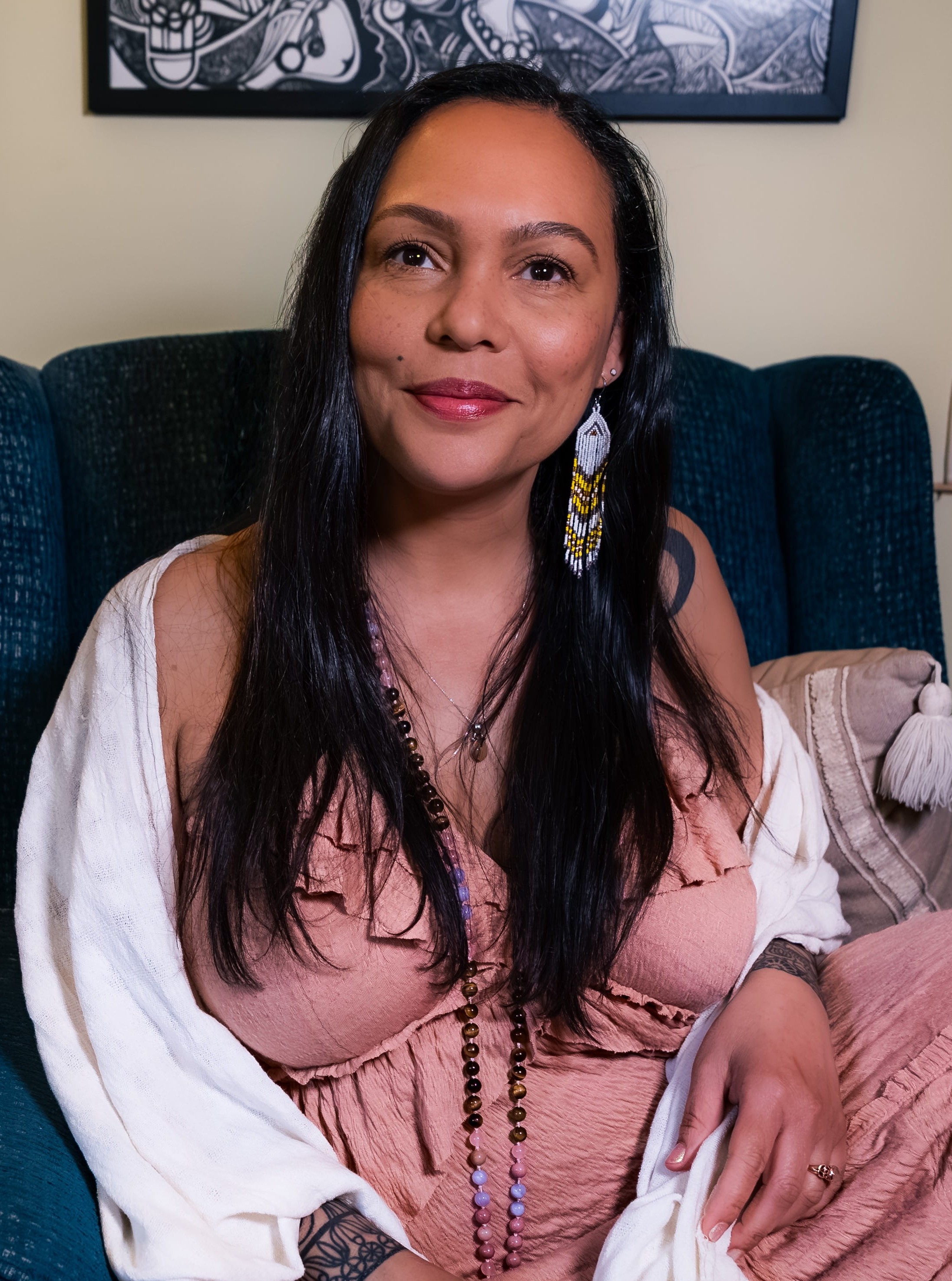
Natasha Crow
Hi — I'm Natasha Crow
Natasha Crow is a Licensed Professional Counsellor, LPC and Certified Somatic Experiencing® Practitioner offering trauma-informed holistic therapy and Somatic Guidance for nervous system regulation in Oregon and nationwide.
Schedule a Consultation